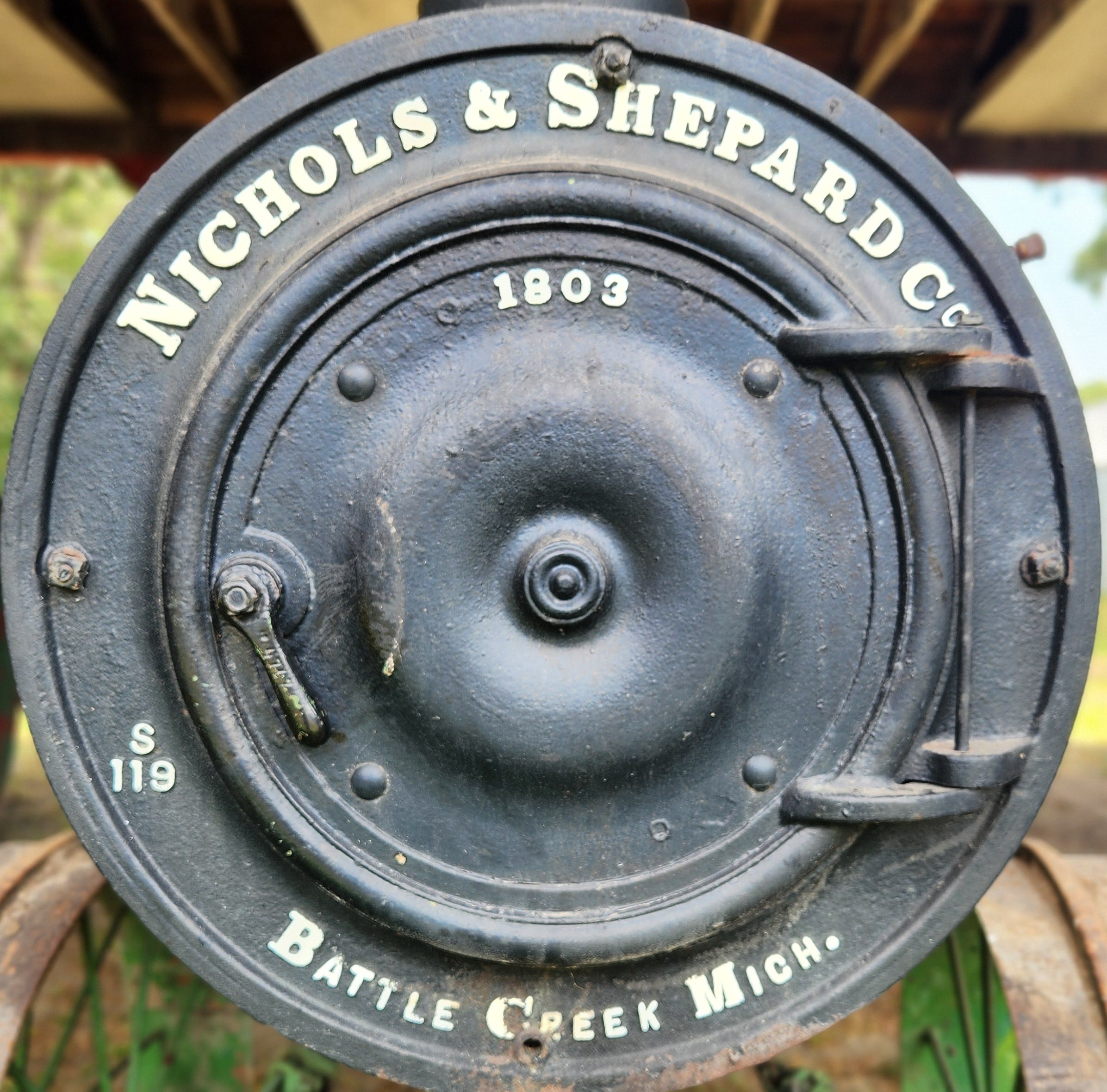
The Nichols & Shepard Company of Battle Creek, Michigan, stands as one of the most respected names from the golden age of steam power and threshing. Founded originally in 1848 by John Nichols and David Shepard, the firm initially made its mark with revolutionary threshing technology (like the “Vibrator” separator and later the famous Red River Special line).
By the late 1870s and the 1880s, the company transitioned from portable steam engines into self-propelled steam traction engines, building a reputation for heavy-duty, robustly engineered machines built specifically for the demanding work of prairie plowing and threshing.
Key Engineering Features
Nichols & Shepard steam engines were distinctive for several technical characteristics that set them apart from competitors:
Heavy Boiler Construction: They were famous for incorporating some of the thickest boiler plates used in traction engine manufacturing. This gave their boilers exceptional structural integrity, great thermal efficiency, and massive steam capacity, allowing them to steam easily even under fluctuating loads.
The Marsh Reverse Gear: Early on, Nichols & Shepard engines became widely known for utilizing the Marsh reverse valve gear (and later variants like the Stephenson twin eccentric system). The valve gear allowed operators to easily control engine direction and variable steam cutoff, maximizing fuel and water efficiency during belt work or heavy drawbar pulling.
Double-Cylinder Simple Engines: While they built single-cylinder units, their large-horsepower plowing engines utilized a side-by-side double-cylinder setup connected to a common crankshaft. This eliminated the issue of getting stuck on a “dead center” and provided incredibly smooth, high-torque power delivery.
Heavy-Duty Drive Clutches: To prevent gear and clutch damage under massive loads (like pulling a 12-bottom plow through tough prairie sod), many large models featured solid drive pins. This allowed operators to completely bypass the clutch mechanism and lock the crankshaft directly to the massive steel output drive gears.
The Behemoth: The 30-98 hp “Big Nick”
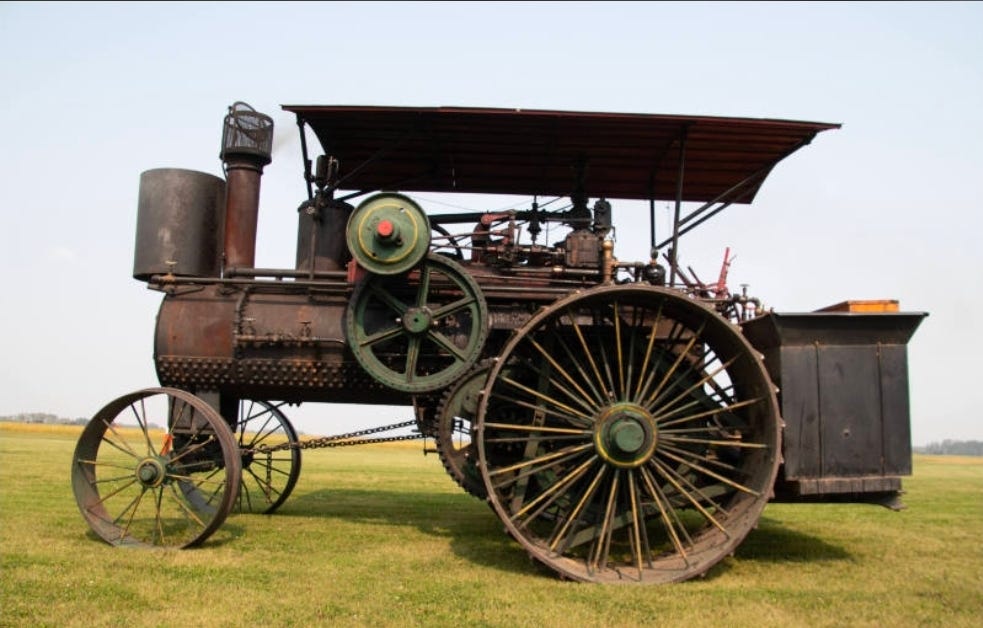
The pinnacle of Nichols & Shepard’s steam evolution was their massive 30-98 horsepower plowing engine, affectionately nicknamed “Big Nick” by engineers and collectors. Designed primarily for the expansive farming operations of the Western Canadian and American prairies, it remains one of the largest and most powerful traction engines ever built.
As gasoline and kerosene tractors proved more efficient and less labor-intensive in the 1910s and 20s, steam sales sharply declined. In 1929, Nichols & Shepard merged with the Hart-Parr Tractor Co., the Oliver Chilled Plow Works, and the American Seeding Machine Co. to form the Oliver Farm Equipment Company. Oliver quickly phased out the remaining steam lines to focus on smaller, versatile four-cylinder internal combustion tractors.
Today, survived Nichols & Shepard engines are highly prized centerpieces at agricultural heritage museums and steam shows across North America, celebrated for their distinct exhaust note and rugged engineering.
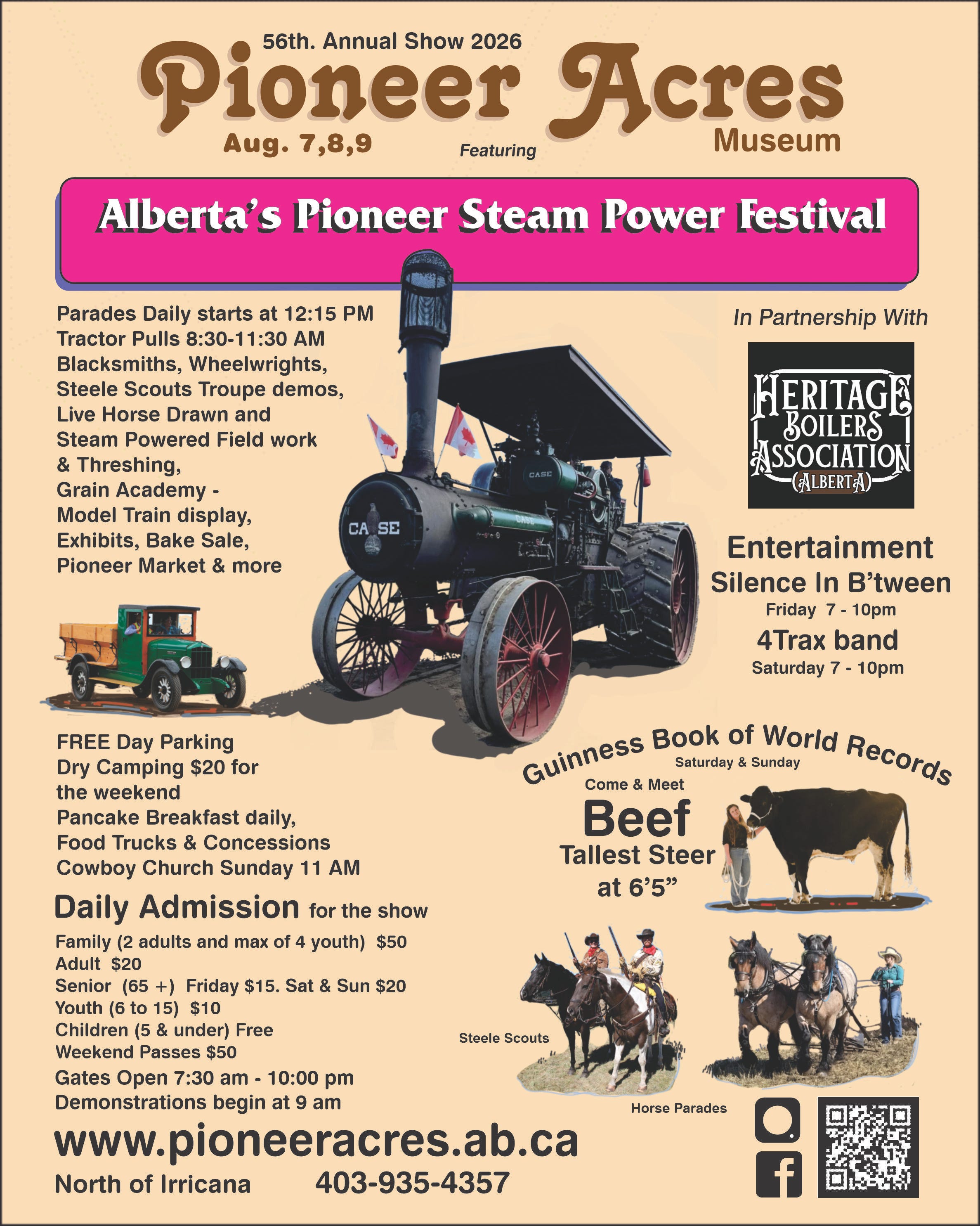
Big Nick from Reynolds Museum will be operating at ALBERTA’S PIONEER STEAM POWER FESTIVAL on August 7,8,9.