

SPRING SEEDING
An enormous undertaking
Spring crop planting in Western Canada is a logistical feat of massive proportions, characterized by a narrow window of opportunity and a staggering volume of inputs. As of late April 2026, farmers across Alberta, Saskatchewan, and Manitoba are mobilizing to seed over 60 million acres of land.
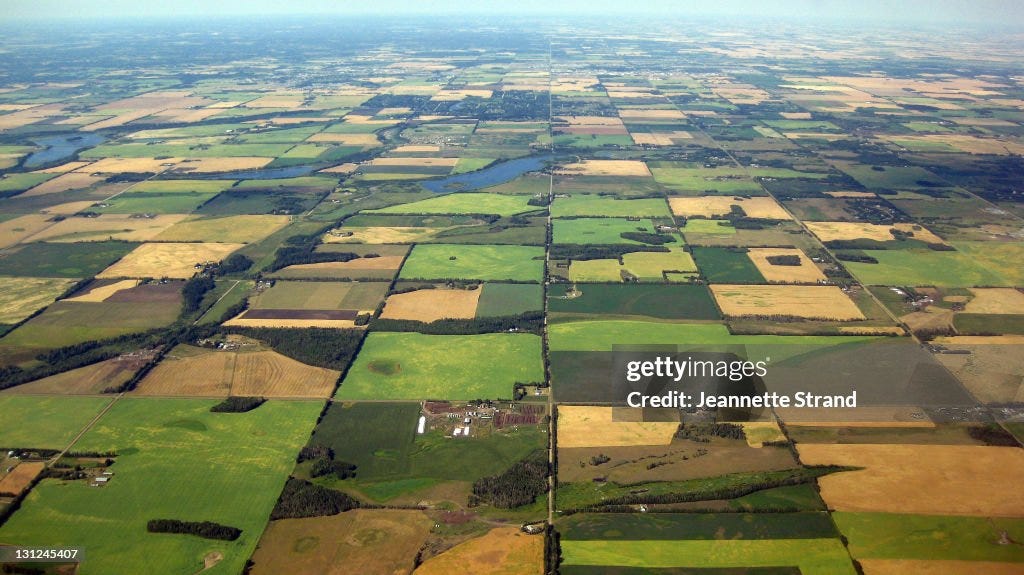
The scale of this “enormous undertaking” can be broken down by the sheer volume of supplies required to get the crop in the ground.
Land and Acreage (The Canvas)
According to the latest 2026 planting intentions, the “Big Three” crops dominate the landscape:
Wheat (All types): Approximately 26.7 million acres.
Canola: Approximately 21.8 million acres.
Barley: Approximately 6.4 million acres.
Total Principal Field Crops: Estimated at 78 million acres across Canada, with the vast majority concentrated in the Prairie provinces.
Seed Requirements (The Biological Foundation)
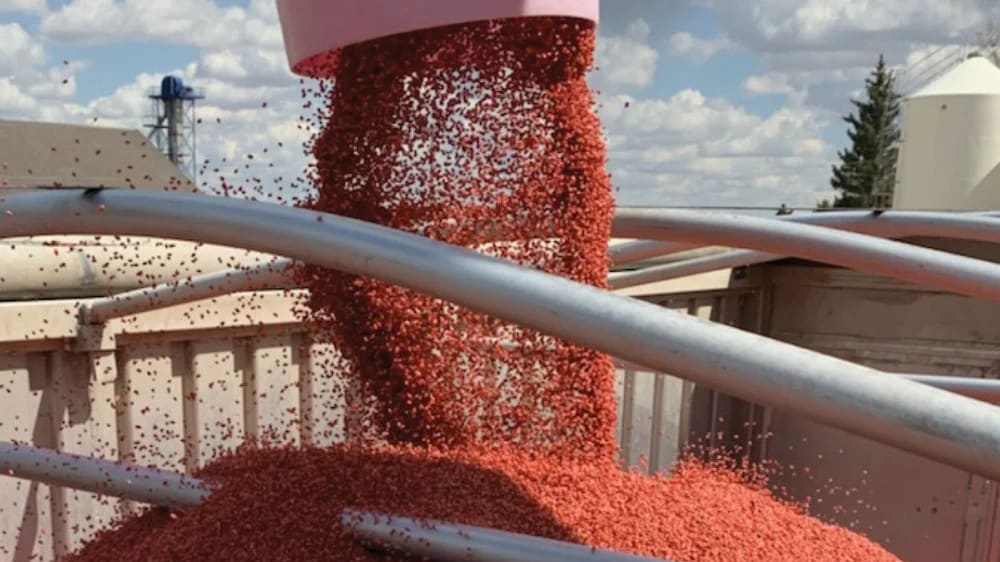
Seeding rates vary by crop and seed size (TKW - Thousand Kernel Weight), but the total volume of seed moved onto fields is immense:
Wheat: Typically seeded at 100–120 lbs per acre. For 26.7 million acres, this requires roughly 53 million bushels of seed wheat.
Canola: Seeded at a much lower rate (approx. 5 lbs per acre) due to tiny seed size. Even so, this requires over 110 million lbs of high-value, often treated, hybrid seed.
Barley: Seeded at roughly 90–110 lbs per acre, requiring approximately 300,000 tonnes of seed.
Fertilizer and Nutrition (The Fuel for Growth)
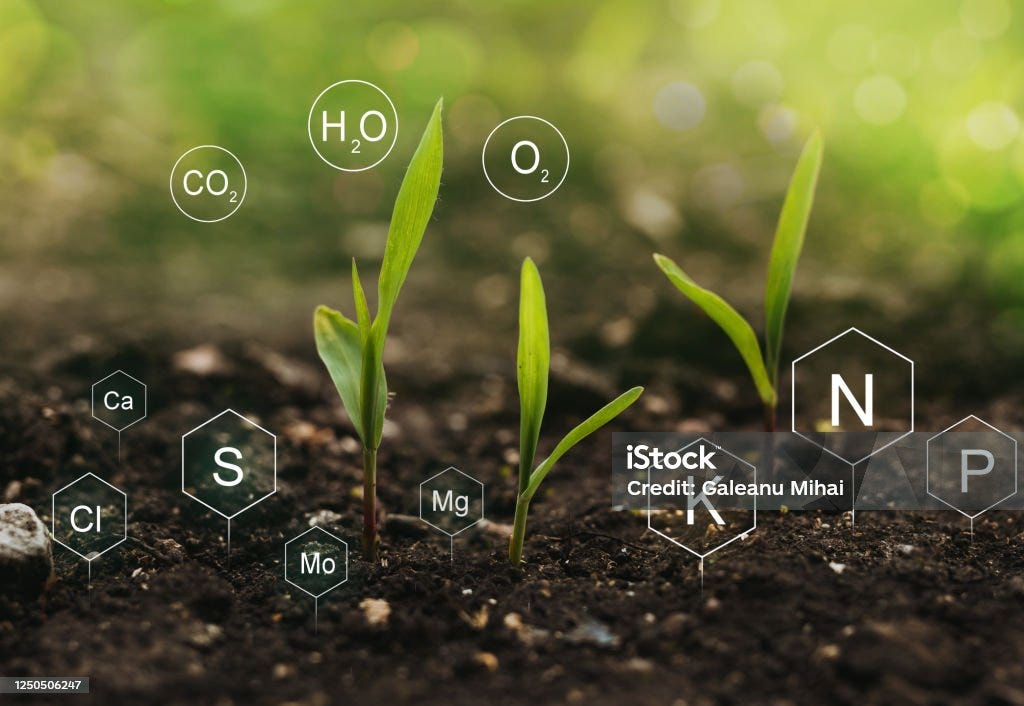
Fertilizer represents the largest physical volume of inputs moved during the spring. Nitrogen (N), Phosphorus (P), Potassium (K), and Sulfur (S) are the primary requirements.
Typical Rates: A common prairie “blend” for high-yield wheat or canola might involve 80–120 lbs of Nitrogen and 30–40 lbs of Phosphorus per acre.
Total Tonnage: At an average aggregate rate of 150 lbs of total fertilizer product per acre across 60 million acres, the Prairies require roughly 4.5 million tonnes of fertilizer to be blended, transported, and applied in a 4- to 6-week window.
Fuel and Energy (The Kinetic Force)
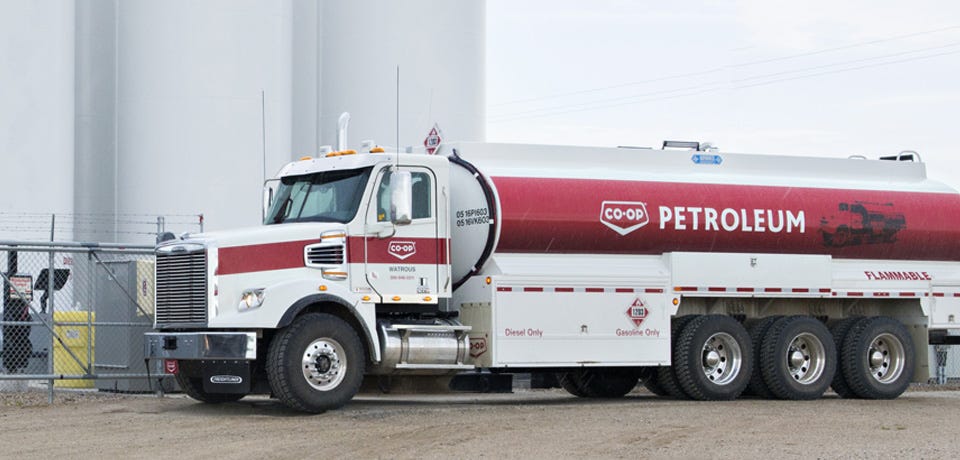
Modern air drills and high-horsepower tractors (often 500+ hp) consume massive amounts of diesel to pull wide implements (60–90 feet) through heavy soil.
Consumption: Average fuel use for seeding and associated tillage/spraying is approximately 1.5 to 2.5 gallons of diesel per acre.
Total Volume: This equates to roughly 90 to 150 million gallons of diesel fuel consumed across the Prairies just to complete the spring seeding pass.
The players
The spring planting season is a complex choreography involving a vast network of specialized “players.” While the farmer is the central figure, the success of the season depends on an integrated supply chain that spans local retailers, global logistics, and government bodies.
The On-Farm Team
The Producers: The primary decision-makers who manage the capital-intensive risk. They coordinate the labor and technical operation of seeding equipment.
Hired Labor & Seasonal Workers: Skilled operators who run air drills, tractors, and tender trucks 24/7 during the “planting window.”
Agronomists: Often called “crop doctors,” these specialists (from independent firms or retail partners) conduct soil tests, recommend “prescriptions” for fertilizer, and advise on variety selection based on local conditions.
Supply and Retail Partners
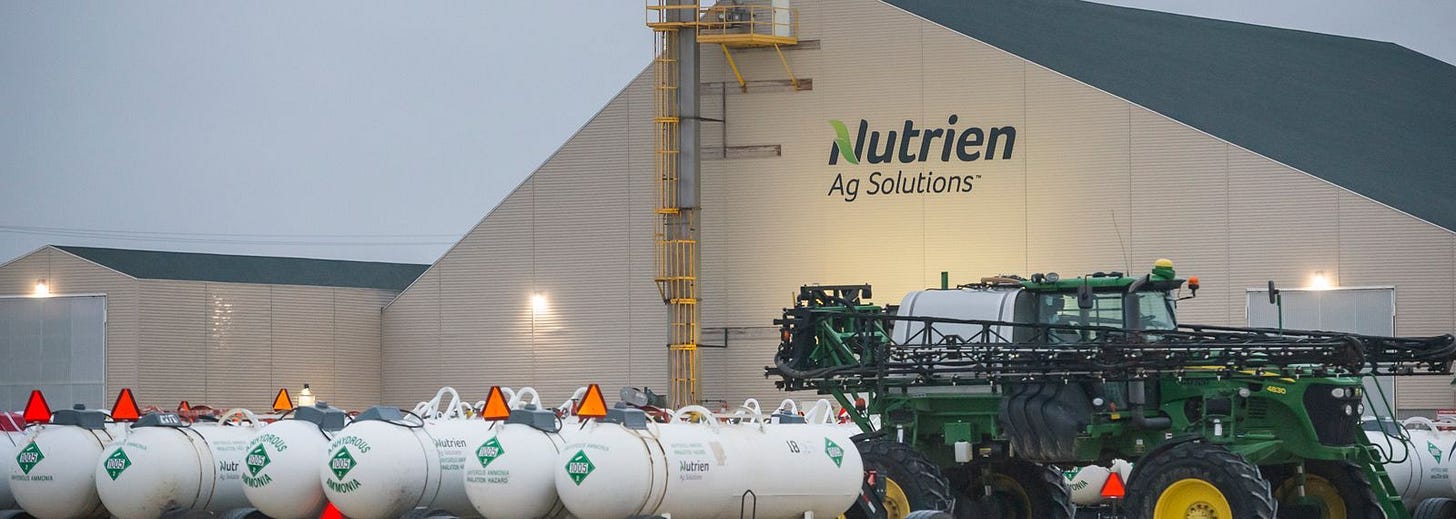
Ag-Retailers (e.g., Nutrien, Richardson Pioneer, independent co-ops): The local hubs where fertilizer is blended, seed is treated, and chemicals are staged. They provide the “just-in-time” delivery of the 4.5 million tonnes of product mentioned earlier.
Seed Multipliers & Breeders: Companies (like Bayer or Corteva) that develop high-yield, drought-resistant hybrids, and the local growers who clean and scale that seed for mass distribution.
Fuel Distributors: Bulk fuel suppliers who must keep farm storage tanks topped up with millions of liters of diesel to prevent seeding rigs from sitting idle.
Logistics and Infrastructure
Class 1 Railways (CN and CPKC): The backbone of the system. In 2026, they are under constant pressure to move fertilizer inland while simultaneously hauling the previous year’s grain to port.
Trucking Fleets: Short-haul drivers who move product from rail terminals to retail sites, and custom applicators who may be hired to spray “pre-seed” burn-offs.
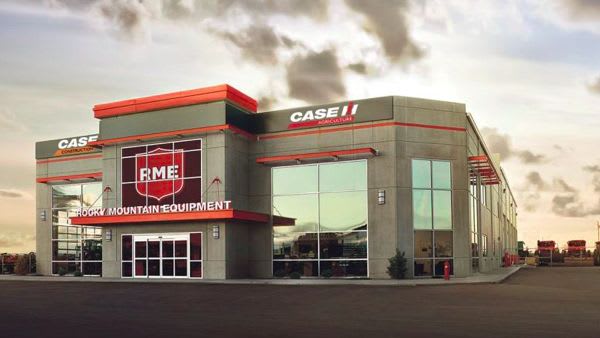
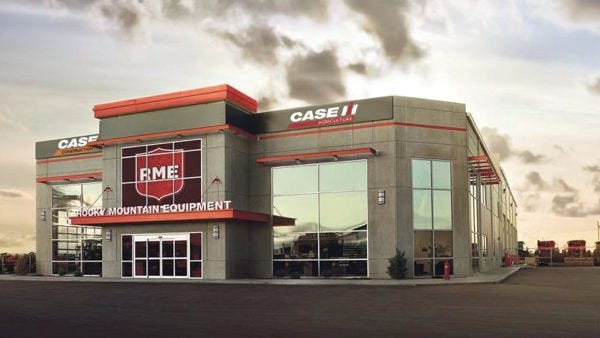
Equipment Dealers: Technicians and parts departments (John Deere, Case IH, etc.) who provide emergency “field service.” During seeding, a broken hydraulic hose or a GPS failure can cost a farmer thousands of dollars in lost time.
Financial and Risk Management
Agricultural Lenders: Banks and specialized agencies (like FCC or the Advance Payments Program) that provide the massive operating lines of credit required to buy spring inputs.
Crop Insurance Providers (e.g., AFSC in Alberta, SCIC in Saskatchewan): Provincial agencies and private hail insurance brokers who help mitigate the risk of drought, frost, or flooding that could ruin the crop before it even emerges.

Commodity Traders: Specialists who help farmers “lock in” prices or hedge their risks on the futures market while the seed is still in the air drill.

Regulatory and Scientific Bodies
Environment Canada & Meteorological Services: Senior agricultural meteorologists who provide the hyper-local weather forecasting essential for timing the “first pass.”
Statistics Canada: Agencies that track “planting intentions” (like the March 2026 report) to help the entire industry predict demand for rail cars and supplies.
Municipal Districts (MDs) & Counties: Local governments that manage road bans and heavy-haul routes to ensure equipment can move between fields without damaging infrastructure during the spring thaw.
50 years of changes
The technological leap from 1976 to 2026 is the difference between a mechanical era defined by physical labor and a digital era defined by autonomous intelligence.
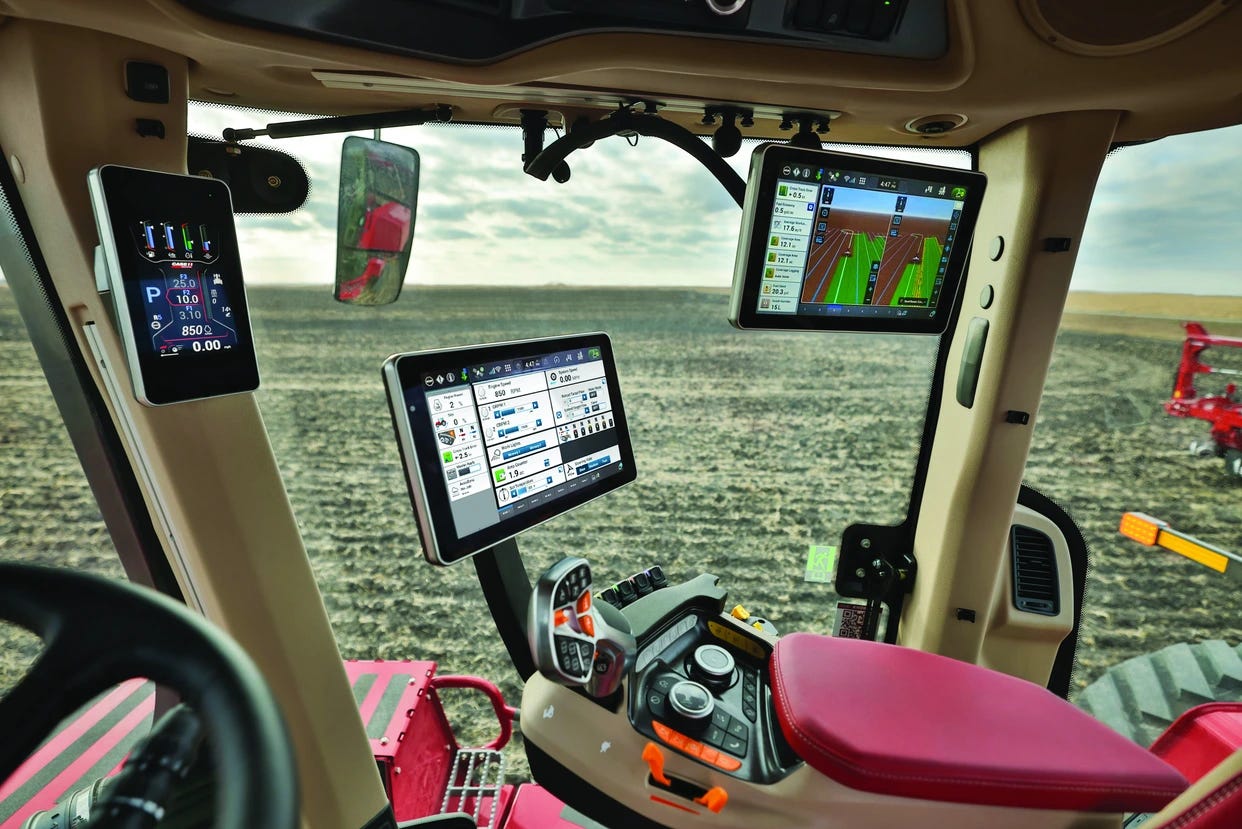
Fifty years ago, a farmer spent the day looking behind them at the equipment; today, the equipment looks after itself while the “operator” manages data from a screen.
Power and Scale: The Horsepower Explosion
In 1976, a 150-horsepower tractor was considered a “big” four-wheel drive. Today, those same tasks are handled by machines that have quadrupled in power and tripled in width.


Feature 1976 (Mechanical Era) 2026 (Autonomous Era)
Primary Tractor HP 70–150 HP 500–670+ HP
Seeding Width 20–30 ft (Hoe Drills) 80–120 ft (Air Drills)
Work Pace 80–100 acres per day 500–800+ acres per day
Guidance: From “Eye-Balling” to 2.5 cm Precision
The most profound shift is in how the equipment moves across the field.
1976: Farmers relied on visual markers, physical “disc markers” that left a scratch in the dirt, and pure driving skill to avoid overlaps or gaps. Fatigue was a major factor in efficiency.
2026: RTK (Real-Time Kinematic) satellite guidance is standard, providing 1-inch accuracy. Some farms in Alberta have now transitioned to fully autonomous platforms (like the Raven OMNiPOWER or John Deere 8R), where the tractor seeds the field without a human in the cab, managed via a tablet from the edge of the field.
Tillage: The “Dust Bowl” Lessons
1976: Heavy tillage was the norm. Every third field was often “summerfallow” (left unseeded and worked with a cultivator to kill weeds). This led to massive soil erosion and moisture loss.
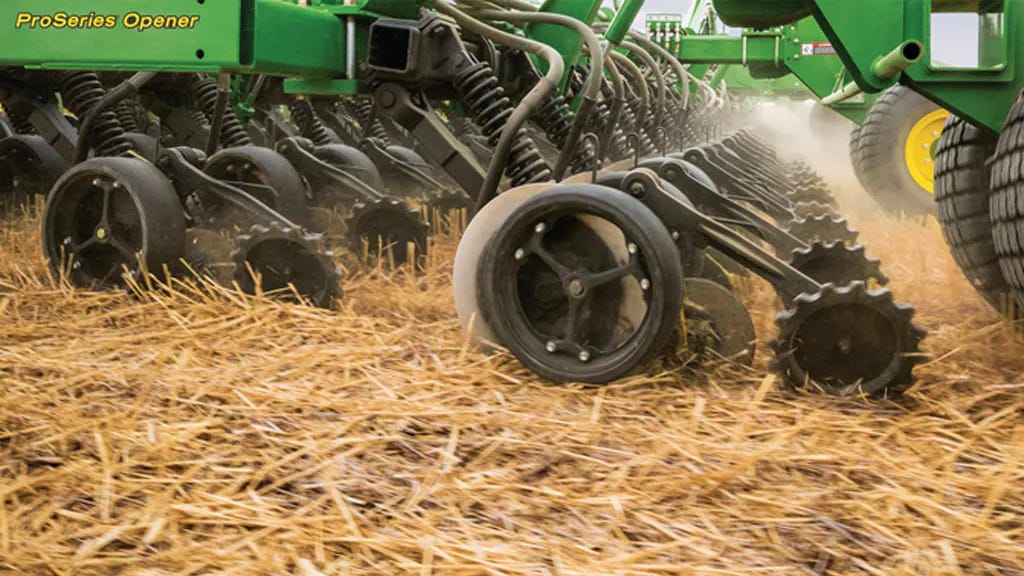
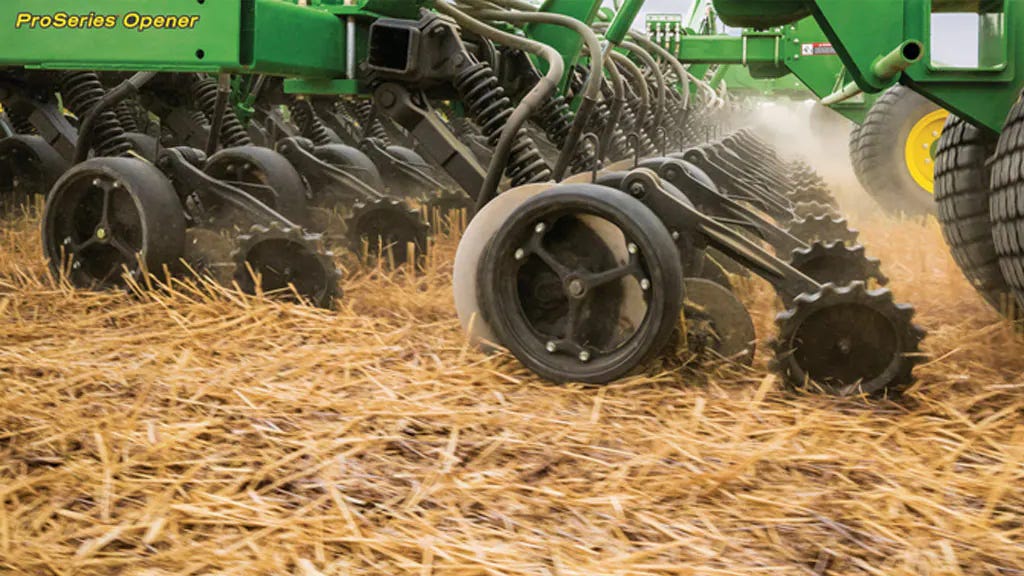
2026: The Prairies have almost entirely moved to Zero-Till or Direct Seeding. Modern air drills place seed and fertilizer in a single pass without overturning the soil. This has virtually eliminated the “black blizzards” of the past and sequestered millions of tonnes of carbon in the soil.
The Human Element: In 1976, there were over 61,000 farms in Alberta; by 2026, that number has dropped to about 41,000. Technology hasn’t just made farming “easier”—it has fundamentally changed the social and economic structure of the Canadian Prairies.
Further reading: https://calgaryherald.com/opinion/canadas-quietest-20-billion-megaproject-happens-every-spring-in-agriculture
