

As the Western Canadian crop harvest is being completed and we celebrate Thanksgiving Day, another tradition is taking place across the prairie provinces.
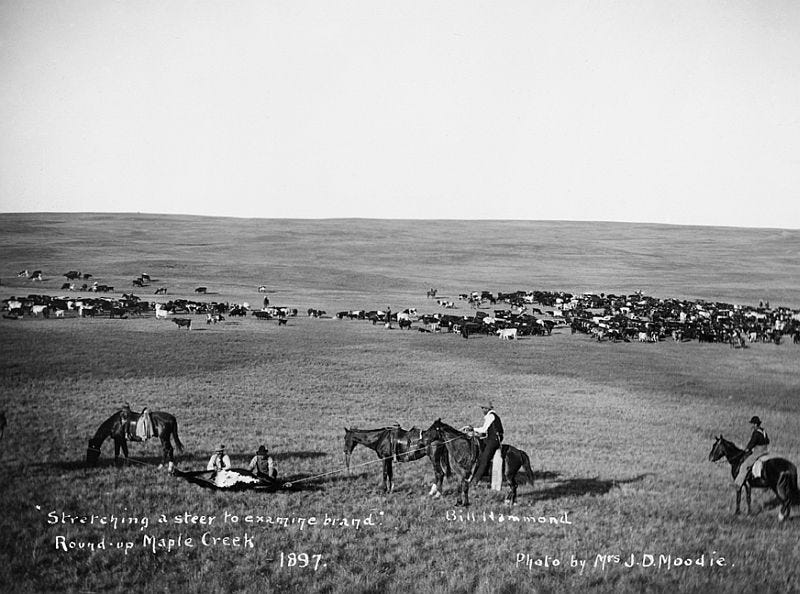
Ever since the first large herds of cattle came across the border from Montana into Southern Alberta about 150 years ago, spring-born beef calves have been taken from their mothers and fed separately until ready for consumption. The fall run is the annual peak season (typically late August through November) when livestock auction marts, feedlots, and ranches process and sell the year’s calf crop. Spring-born calves are weaned off grass and shipped from summer pastures. Ranchers decide whether to sell calves immediately as “feeders” or retain them to feed over the winter. Auction volumes spike significantly across the region, setting key benchmark prices for Western Canadian beef production.
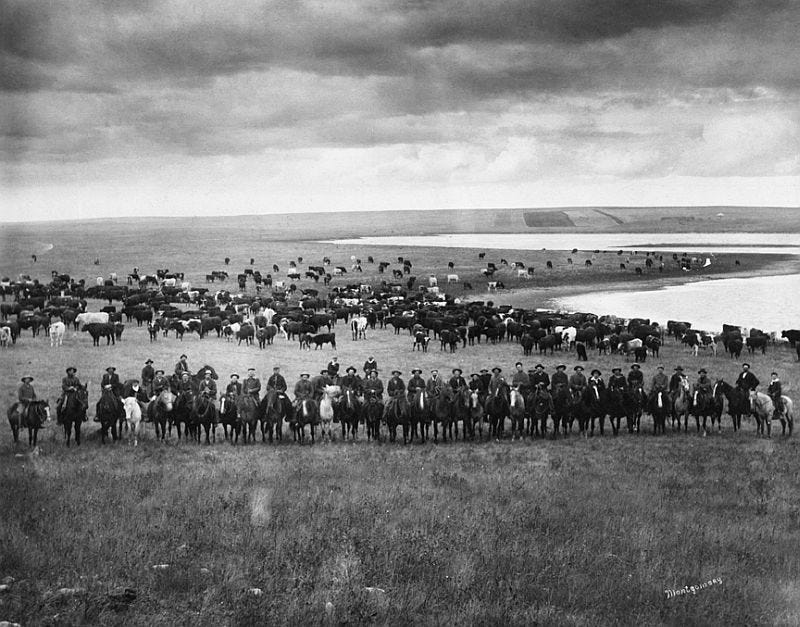
One hundred and fifty years ago, the Canadian Prairie cattle industry was in its absolute infancy. The “fall run” did not exist as an organized commercial sector; rather, it was a seasonal culling of small pioneer herds.
There were no railways across the West yet (the Canadian Pacific Railway wouldn’t reach Calgary until 1883). Cattle were moved strictly on foot. Ranchers or traders drove small herds north from Montana or between river valleys.
Sales were local and dependent on immediate frontier demand—supplying meat to the newly established North-West Mounted Police (NWMP) posts, railway construction camps, or Indigenous agency rations.
Price discovery was entirely informal. A rancher negotiated face-to-face with a government contractor or trading post operator. Animals suffered massive “driving shrink” due to weeks of walking on trail drives before reaching their destination.
In the late 1800s, during the peak of the great lease era in Western Canada, marketing fall calves and steers from corporate mega-ranches (such as the Cochrane Ranche, the Oxley Ranche, and the Bar U) was an arduous, logistically complex undertaking. Without the benefit of modern auction marts, semi-trailer trucks, or instant market data, ranch managers relied on a combination of open-range roundups, long-distance trail drives, and high-stakes private contracts.
The completion of the Canadian Pacific Railway (CPR) in 1883 fundamentally transformed Prairie livestock trade.
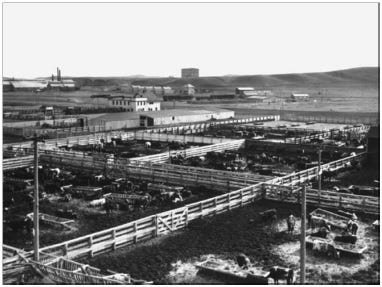
Centralized terminal stockyards were established at major railway hubs—most notably the Calgary Stockyards (1886), alongside central yards in Edmonton, Regina, Moose Jaw, and Winnipeg. (See the story of a stockyard operator here.)
Ranchers shipped railcars of cattle to terminal yards, where commission agents negotiated directly with packing plant buyers (such as Burns, Swift, and Armour).
In the late 19th and early 20th centuries, large numbers of live Prairie steers were shipped by rail to Atlantic ports and loaded onto steamships for export to the United Kingdom.
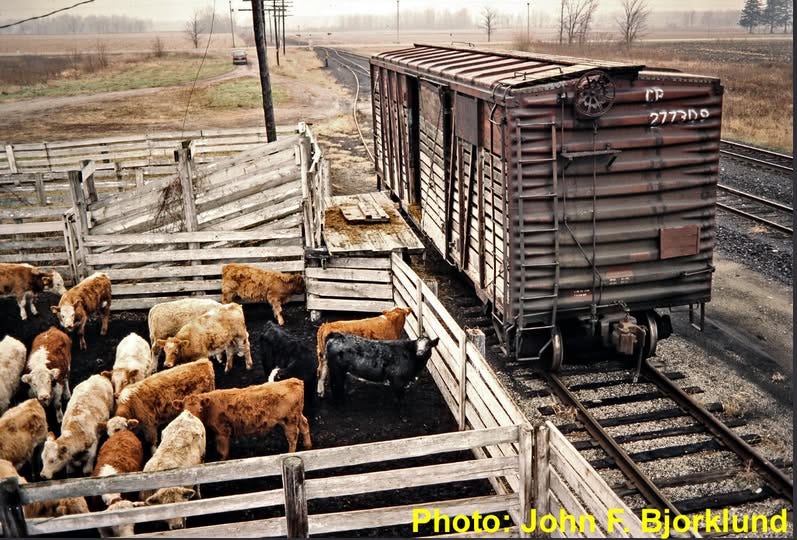
Post-WWII improvements in trucking infrastructure and provincial highway networks shifted power away from centralized urban stockyards to rural communities.
Country auction markets sprang up across small-town Alberta, Saskatchewan, and Manitoba (e.g., Olds, Ponoka, Lloydminster, Brooks).
The open-outcry auction ring became the dominant price-discovery mechanism. Local auction marts allowed producers to transport calves shorter distances, sell in smaller groups, and watch buyers bid live in person.
As commercial cattle feeding exploded in southern Alberta, feedlot order buyers began traveling ring-to-ring across the Prairies to secure feeder calves during the autumn “fall run.”
Advances in telecommunications, video, and digital networks added direct-marketing alternatives to the traditional auction ring.
Launched in the late 1980s and 1990s, video sales allowed ranchers to market large, uniform groups of calves directly off the ranch without truck unloading or auction-yard shrink.
Today, the autumn fall run is a multi-million-dollar, highly orchestrated logistics machine connecting remote prairie ranches directly to commercial feedlots.
Calves are weaned off grass, sorted, vaccinated, and loaded onto multi-deck semi-trailer trucks. They can travel from a ranch in southern Alberta or Saskatchewan to a feedlot in hours.
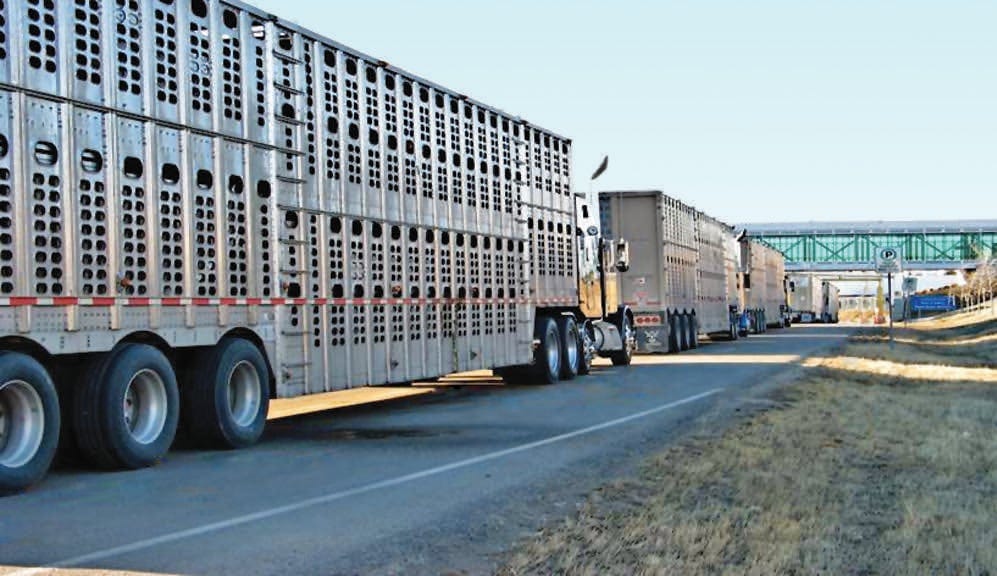
Ranchers have multiple modern avenues: loading cattle into local auction rings for live competitive bidding, filming truckload lots for electronic video auctions, or locking in forward contracts directly with feedlot operators months in advance.
Marketing is no longer based solely on visual appraisal at the gate. Buyers evaluate cattle based on verifiable health protocols (pre-conditioned vaccination programs), age verification, electronic RFID ear tags, and breed-specific genetic merit. Pricing is instantly benchmarked against continental supply and demand.
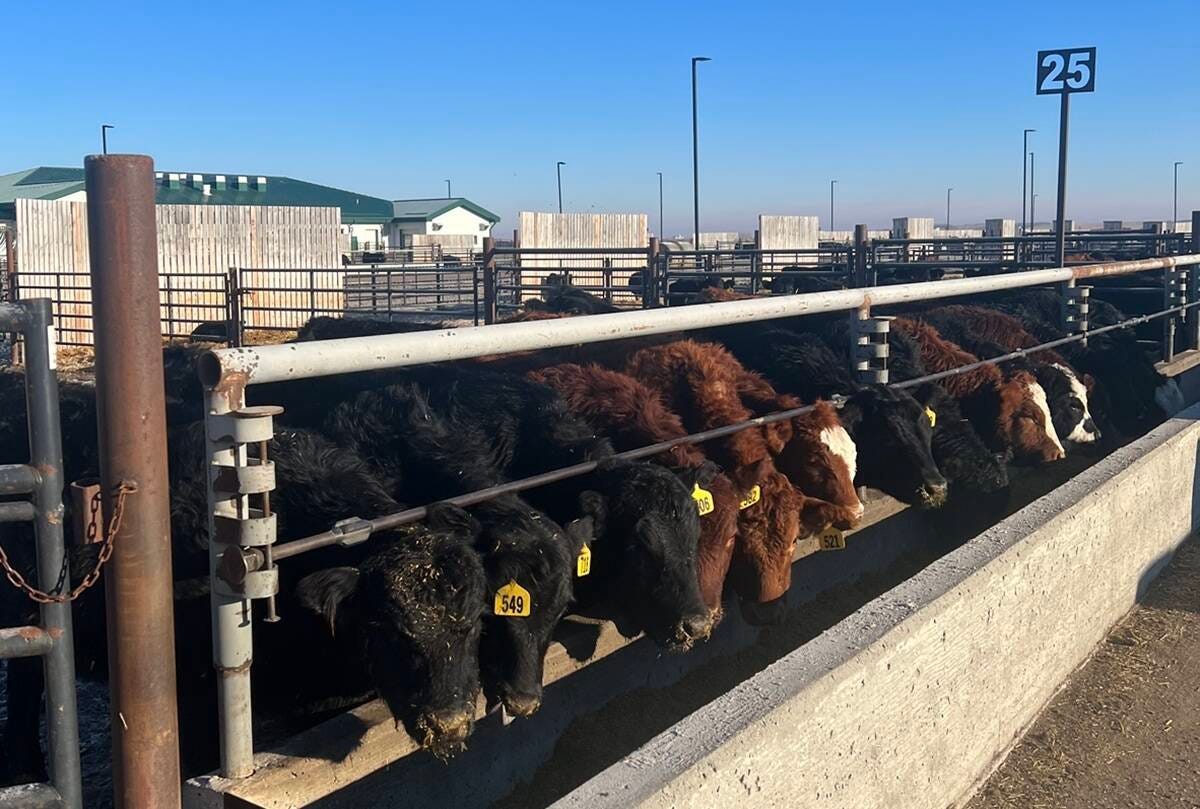
Across Prairie auction markets (Alberta, Saskatchewan, and Manitoba), approximately 1.4 to 1.6 million calves are expected to sell during this year’s primary fall run between September and December. The total 2026 Western Canadian calf crop is roughly 2.8 to 2.9 million head. Only a portion of the total calf crop moves through public auction mart rings during the fall months. Commercial producers are keeping a higher percentage of replacement heifers on farm to begin rebuilding herds following several dry years. Many ranchers retain calves on farm to feed through the winter rather than marketing them as light calves during peak autumn supply.
Sources:
Initiation and Growth of the Live Stock Industry in Alberta, Alberta, Past and Present, Historical and Biographical
From Start to Finish Cattle Feeding History, Alberta Cattle Feeders Association
The Historical Development of Cattle Production in Canada , ResearchGate
Canfax Cattle Market Report, The Western Producer
The Daily - Livestock Estimates, Statistics Canada
